Visual explainer
Embedding Space
How models convert fuzzy semantic meaning into precise mathematical distances.
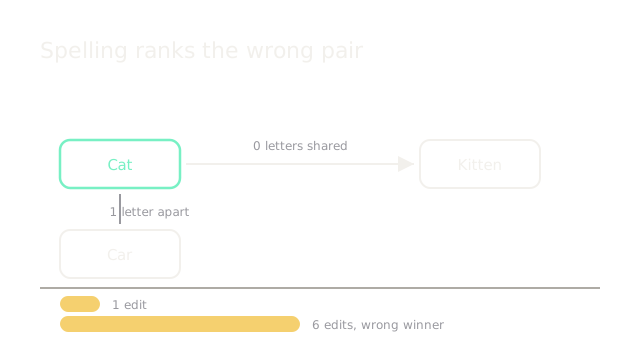
You read cat and kitten as cousins, but raw code sees letters only. Cat shares two letters with car and none with kitten, so spelling ranks the wrong pair first.
Words Become Vectors
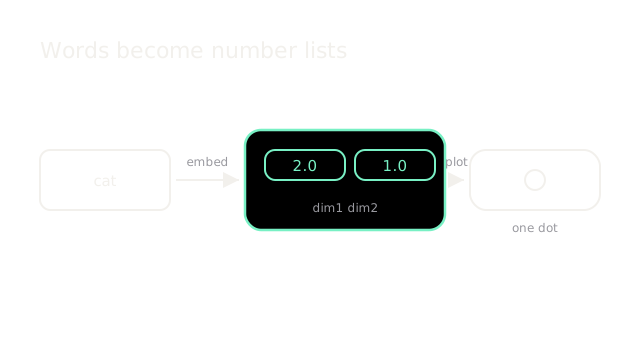
You hand a word to the model and get back a short list of numbers. Cat becomes [2.0, 1.0] and car becomes [0.2, 2.8], so each word now owns a dot you can plot.
Angles Measure Meaning
![Vectors [2,1] and [1,3] meet at 45 degrees with cosine 0.707.](/diagrams/visuals/embedding-space/03-cosine-forty-five-degrees.svg)
You dot [2,1] with [1,3] to get 5, divide by 2.24 times 3.16, and land cosine 0.707. That is 45 degrees, so you can read closeness as an angle.
Shifts Stay Parallel
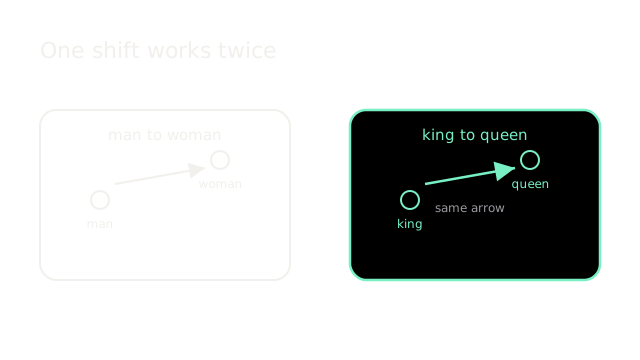
You learn one shift from man to woman and reuse it. Add that same arrow to king and you land near queen, which tells you relations live as directions.
Meaning Beats Spelling
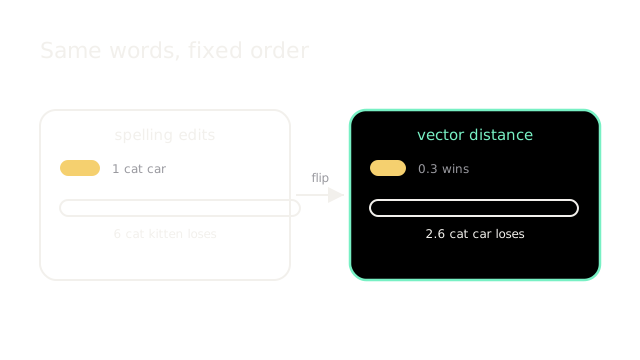
You compare the same three words on two rulers. Spelling says cat-car 1 edit beats cat-kitten 6, while vectors say 0.3 beats 2.6 and fix the order.
Pick Your Ruler
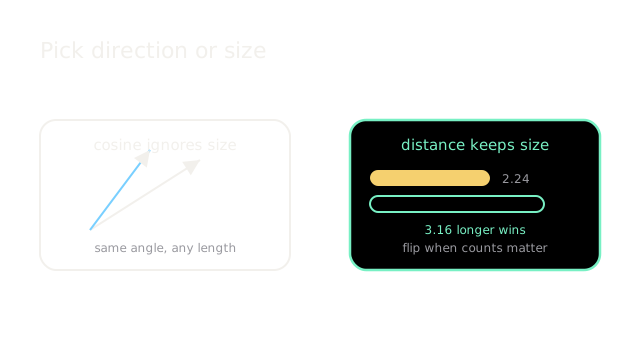
You use cosine when direction matters and length should not. Flip to Euclidean distance when counts matter, like when frequent words grow longer vectors than rare ones.
Where It Breaks
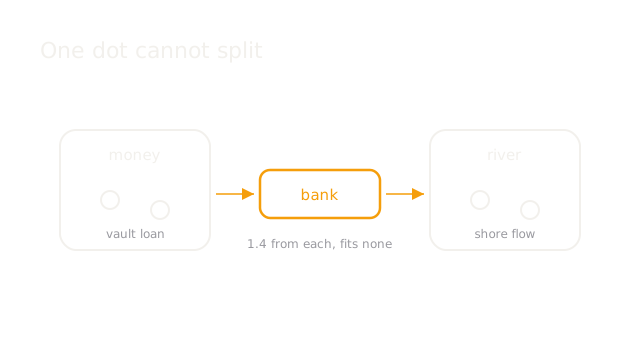
You give bank one dot for river edge and money house. It parks halfway between both groups and matches neither, so you'll need context to split it.
The Quick Version
- Spelling ranks cat with car, not kitten.
- Vectors give each word a plottable dot.
- Cosine 0.707 means a 45 degree gap.
- One shift links man-woman and king-queen.
- Vectors flip spelling order to meaning order.
- Cosine for direction, distance for size.
- One bank dot cannot hold two meanings.