Visual explainer
Graph Neural Networks
Lonely rows miss friendships that decide labels. See how mailed messages and averaged neighbours add context hop by hop.
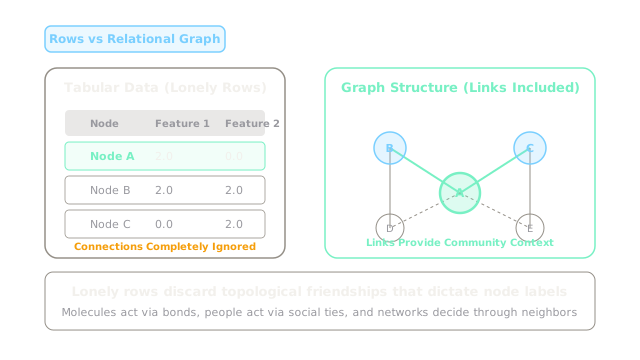
You store users as lonely rows and ignore who links whom. Yet friends shape taste, molecules act through bonds, and roads route through neighbours. Links carry the signal your rows drop.
Mail Vectors To Neighbours
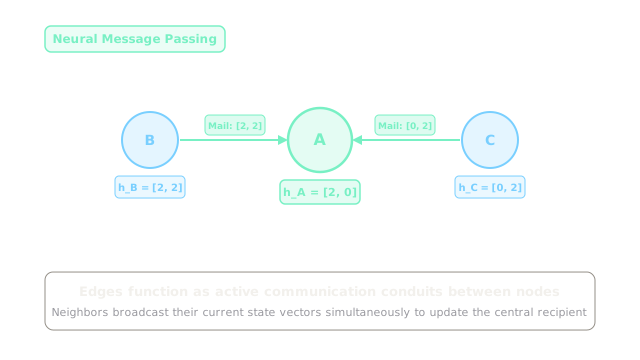
Each node mails its feature vector along every edge. Your target collects the mail, then blends it with its own state. Edges turn from decoration into the update path itself.
Average Real Neighbour Numbers
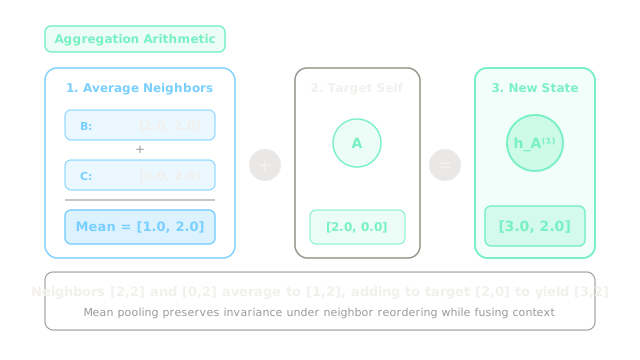
Here is the focal math. Neighbours send 2,2 and 0,2, which average to 1,2. Add your target 2,0 and the update becomes 3,2. Same rule runs at every node at once.
Reach Friends Of Friends
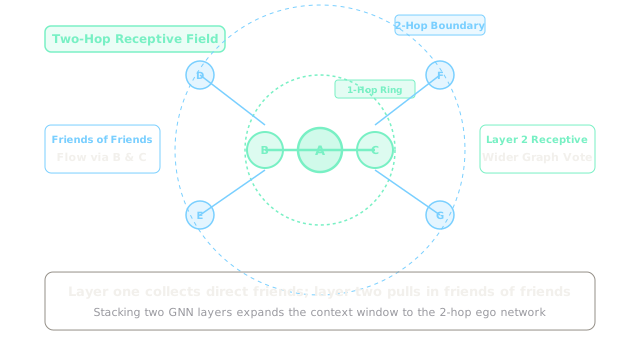
One layer sees direct friends. Stack a second layer and friends of friends flow in through the middle nodes. Two hops now shape your target, so wider context joins the vote.
Linked Calls Beat Lonely
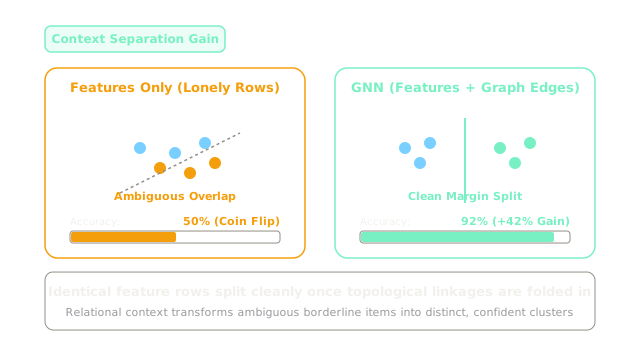
Same users, two scorings. Lonely rows mix the groups and miss half the labels. With links folded in, the same users split cleanly. Context bought that gap on identical features.
Stop Near Two Layers
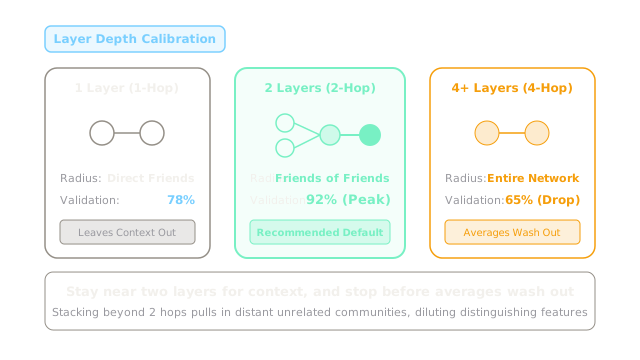
Stay near two layers when your graph is dense and homophilous. Add a third only while validation gaps keep growing. Flip shallow the moment extra hops blur group edges you need.
Where It Breaks
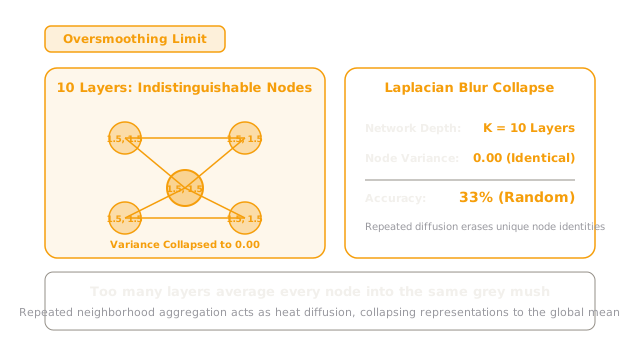
Stack too far and averages eat identity. After many rounds every node holds the same grey mush, so distinctions vanish. When deeper scores sink, you oversmoothed past useful context.
The Quick Version
- Lonely rows drop link signal.
- Nodes mail vectors along edges.
- Neighbours 2,2 and 0,2 average to 1,2.
- Two layers reach friends of friends.
- Links split groups lonely rows mix.
- Stay shallow before averages wash out.
- Too many layers mush every node alike.