Visual explainer
The Agent Router Architecture
How a small classifier in front of big models sends each request to its cheapest lane.
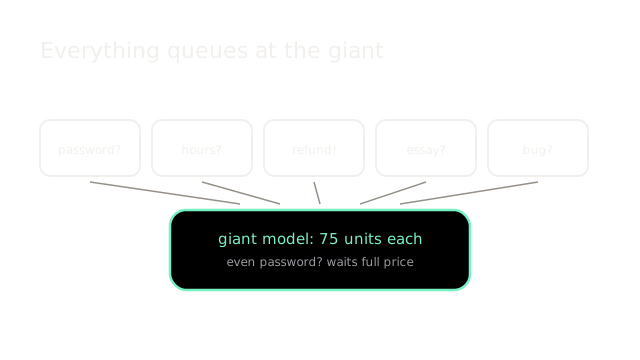
Five requests queue up and even password help pays the giant's 75 units. Easy questions burn the same fortune as hard ones.
A Cheap Bouncer
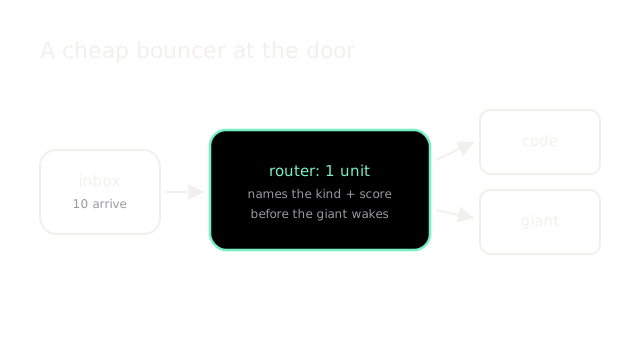
A tiny classifier names the kind and scores it for 1 unit before the giant wakes. Ten requests cost 10 units to sort, and most never go further.
Scores Become Addresses
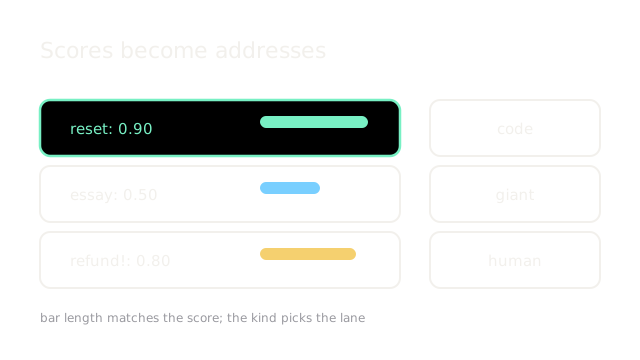
Reset scores 0.90 and goes to code, essay scores 0.50 and goes to the giant, angry refund scores 0.80 and goes to a human. Bar length matches the score.
Mind the Gate
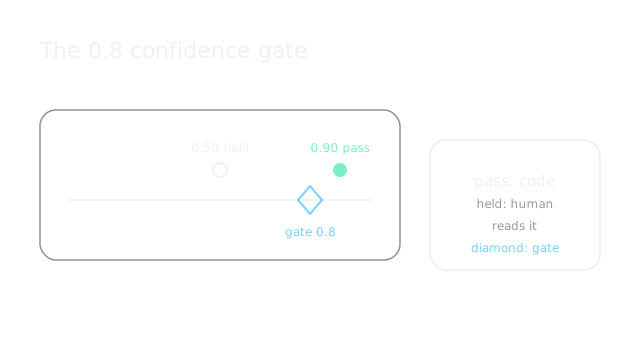
The 0.90 sails through while the 0.50 waits for human eyes. The gate at 0.8 splits the confident from the questionable every single time.
The Bill Shrinks
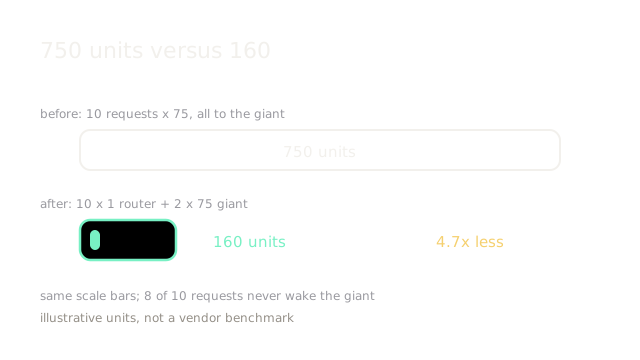
Ten requests at 75 units cost 750 before. After routing, 10 units of sorting plus 2 giant calls cost 160, about 4.7 times less. Units are illustrative, not a benchmark.
Set the Gate
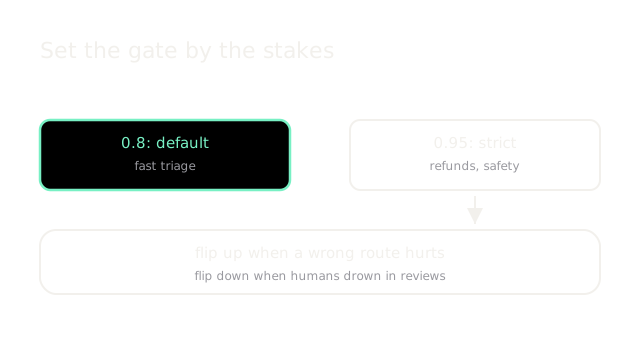
Run 0.8 for fast triage where errors are cheap. Crank it to 0.95 for refunds and safety, and drop it when your humans drown in reviews.
Where It Breaks
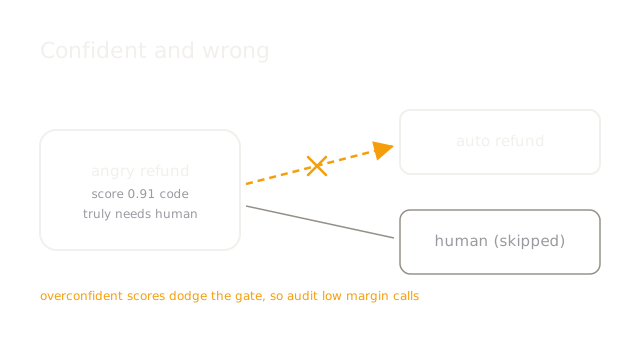
An angry refund scored 0.91 as code skips its human and auto fires. Overconfident scores dodge the gate, so audit your low margin calls.
The Quick Version
- Every request paying 75 units wastes easy ones.
- A 1 unit classifier sorts before giants wake.
- Scores 0.90, 0.50, 0.80 pick three lanes.
- Below 0.8 waits for human eyes.
- Ten requests fall from 750 to 160 units.
- High stakes raise the gate toward 0.95.
- A 0.91 mistake auto fires the wrong lane.
What to Read Next
- How A Decision Head WorksSkip the word by word loop: read a request once with an encoder and answer with small typed heads that output choices, scores and flags.
- Attention MechanismHow attention scores each input word, blends by weight, and rebuilds focus each step.
- TransformersProcessing five words at once through softmax weights and stacked masks, instead of squeezing a sentence through one thin recurrent pipe.