Visual explainer
Diffusion Models
Guessing whole photos in one shot yields blur. See how small noise steps and learned reversals rebuild sharp images.
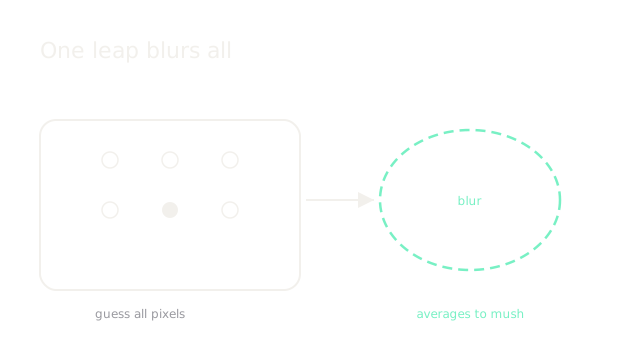
You ask a net to guess a whole photo at once and it hedges. Every uncertain pixel averages out, so faces melt into grey blur. One giant leap cannot carry that much detail.
Bury Photos In Noise
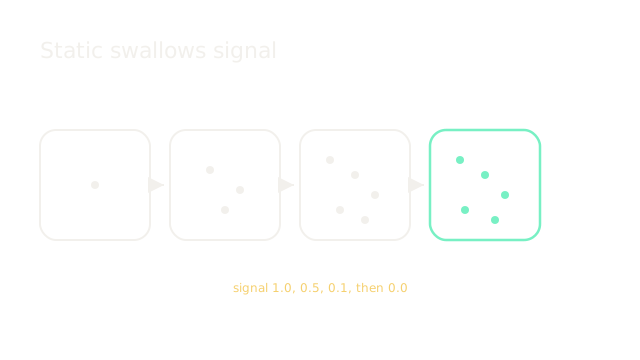
Take a clean photo and add a speck of noise, hundreds of times. Signal fades from full to half to pure static. Each small step is known, so the whole Chain stays learnable.
Predict Then Subtract Noise
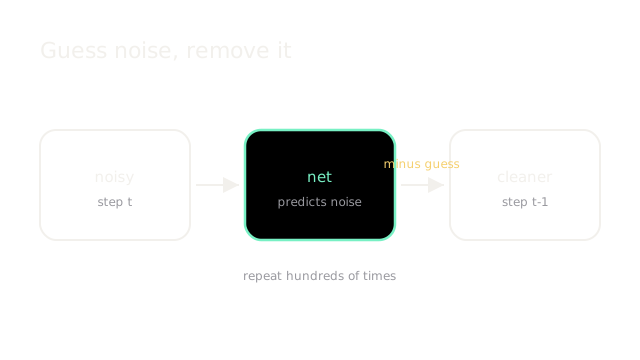
Show your network a noisy middle frame and ask what noise just landed. Subtract that guess and the photo sharpens one notch. Repeat that predict-and-subtract loop back toward clean pixels.
Steer Each Step With Words
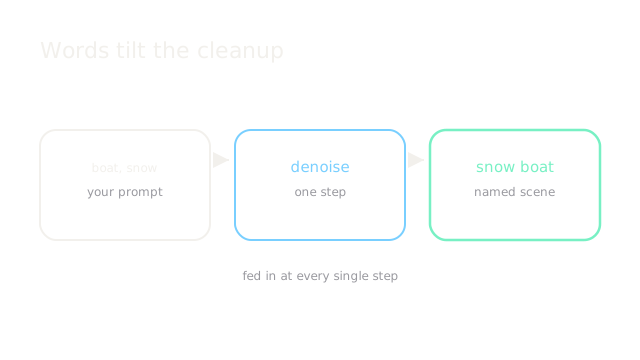
Blind denoising returns a random sharp photo. Feed your words in at each step and the updates tilt toward red boats or snowy peaks. Guidance turns noise into the scene you named.
Small Steps Rebuild Sharpness
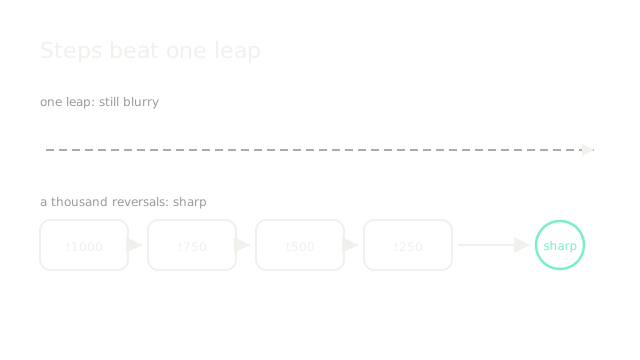
Same static start, two paths. One leap stays blurry while a thousand small reversals rebuild crisp edges. Many easy reversals beat one impossible guess on the same budget.
Trade Steps Against Waiting
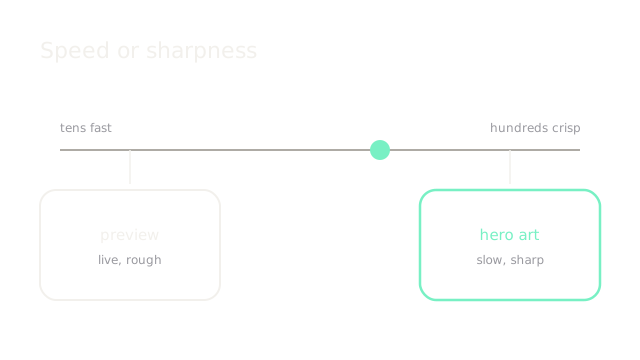
Use hundreds of steps when sharpness pays, like hero art. Drop toward tens when waiting costs more, like live previews. Flip high only while extra steps still sharpen visibly.
Where It Breaks
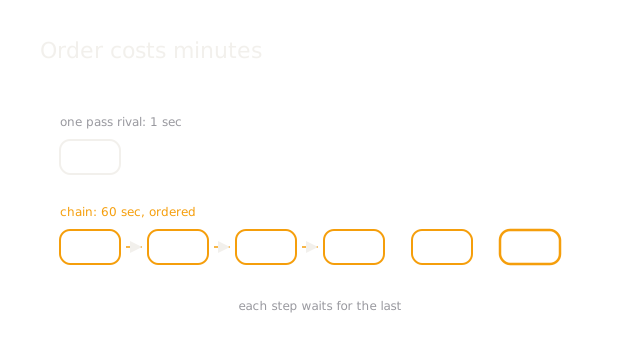
Steps must run in order, since each needs the last. Hundreds of passes make sampling slow beside one-shot rivals. When latency rules, this chain loses despite its sharpness.
The Quick Version
- One-shot guesses blur uncertain pixels.
- Hundreds of noise steps bury photos.
- Networks predict noise to subtract it.
- Words steer each denoise update.
- A thousand reversals rebuild sharp photos.
- More steps sharpen, fewer ship faster.
- Ordered steps still sample slowly.